If you’ve ever stood in our lot running a hand over the straight sides of a new flat bed pickup, you’ve probably wondered the same question I get asked at least three times a week: Do these things actually have a smooth ride? As a flat bed pickup supplier who’s spent 12 years behind the wheel of every model we carry, and who’s walked more new customers through the cab of one than I can count, I don’t just rely on marketing copy to answer that. I rely on the thousands of miles I’ve put on these trucks, the notes our service techs scribble on work orders, and the feedback from tradespeople, farmers, and small business owners who depend on these trucks to get work done every single day. Let’s break this down like I would with a customer leaning against the fender of a shiny new model on our lot—no jargon, just real, usable info. Flat Bed Pick Up Truck

First, it’s easy to stereotype flat bed pickups as rough rides. For decades, that was true. A lot of the older models on the road were built with a solid rear axle, leaf springs, and a frame that was heavy on purpose, but tuned more for hauling heavy loads than for softening the hit of a pothole or a speed bump. If you’ve ever ridden in an old farm truck that bounced you up so hard you nearly hit the roof on a gravel road, you know exactly what I mean. Back then, smoothness was the last thing engineers prioritized. They cared about weight capacity, towing power, and durability—things that matter more when you’re hauling 50 bales of hay or a ton of construction materials.
But here’s the thing: the trucks we sell now? They’re a different animal. Over the last 15 years, the whole pickup market shifted. More customers—especially the ones who use flat beds for daily work, not just occasional hauling—started asking for trucks that could handle both a 1,500-pound load and a commute down a city highway without feeling like you’re bouncing down a rickety bridge. So manufacturers started updating their designs, and that’s changed the ride dramatically.
Let’s start with the parts that actually affect smoothness. First, suspension. The rear suspension on most modern flat bed pickups isn’t just leaf springs anymore. A lot of mid-tier and premium models have what’s called multi-link rear suspension, or adjustable air suspension. I’ve test-driven a 2024 model with air suspension recently, and the difference is night and day. On the highway, with no load at all, it glides over expansion joints that would shake a older model so bad you’d need to grip the steering wheel tight. Add a 2,000-pound load—say, a stack of lumber and a few buckets of tools—and it settles just enough to eliminate that rear-end sag and the rough ride that comes with it. That’s a big win for anyone who uses their flat bed for daily routes, not just occasional heavy hauling.
Front suspension has gotten better too. Most new pickups have independent front suspension, which is way smoother than the solid front axles that were standard not long ago. Independent suspension lets each front wheel move separately over bumps, so if one hits a pothole, it doesn’t jostle the other side of the truck or send a shock up through the steering wheel. I’ve driven an older work truck on the same stretch of road as a new model, and I can tell you—after 10 miles, my shoulders weren’t sore at the end of the new model trip, but they were tight from the old one.
That said, smoothness does depend a lot on how you use your truck. If you’re only driving around empty, unloaded, and mostly on smooth pavement, you’re going to get a way smoother ride than someone who’s hauling 3,000 pounds of material 50 miles on gravel roads every day. Flat beds don’t change that basic physics, no matter how good the suspension is. Any truck—whether it’s a standard pickup, an SUV, or a flat bed—will ride rougher when it’s loaded heavy, because the suspension is compressed to handle that weight. But modern flat beds are tuned to minimize that rough feel, even when they’re working hard.
Another thing people don’t always think about is cab and bed design. A lot of people assume that because there’s no enclosed truck bed, the cab will be rougher. But that’s a myth. The frame is still the core of the truck, and good manufacturers isolate the cab from the frame with rubber mounts, just like they do on any other pickup. Those mounts absorb a lot of the vibration that would otherwise make its way into the steering wheel, the seats, and your back. At our dealership, I’ve had customers come in who traded an old enclosed-bed pickup because the vibration was giving them back pain, and they left in a flat bed shocked at how quiet and smooth the cab is at highway speeds. I’ve logged 2,000 miles in a month for work, and I can tell you—my new flat bed is way more comfortable for long drives than the truck I had 10 years ago, even when I’m hauling equipment.
Of course, there are exceptions. Not all flat bed pickups are built the same. If you go with a base model, entry-level flat bed that’s built purely for work, with very basic suspension, you’re not going to get the same smooth ride as a mid-tier or premium model. Those base models are built to be affordable and heavy-duty, so they skip some of the suspension upgrades to keep costs down. That’s not a bad thing—if all you need is a truck that can haul 4,000 pounds of material and you drive it only on job sites and back roads. But if you’re driving it to a city office every day and want a comfortable commute, you’ll want to step up to a model with better suspension.
I also want to talk about tire choice, because that’s a huge factor people overlook. A lot of flat bed pickups come with heavy-duty all-terrain tires, which are built for rough terrain and heavy loads—but they’re also stiffer than regular highway tires. If you keep those tires inflated to the manufacturer’s recommended pressure (which is usually higher for heavy loads), they’ll handle well, but they can make the ride feel a little bouncier than a truck with softer highway tires. Some of our customers who drive mostly on pavement swap their tires after a year for highway tires, and they notice a big difference in smoothness. That’s a small tweak, but it makes a real difference for daily driving.
I’ve seen this firsthand with a regular customer of ours, Joe, who runs a small landscaping business. Three years ago, he bought an entry-level flat bed pickup because he needed the extra bed space for his mowers and mulch. He complained nonstop for the first month, saying it felt like every pothole was shaking his tools loose. We checked the tire pressure, adjusted it down a little to what he’d be running for light loads, and recommended he get his suspension inspected. We also upgraded him to a mid-tier model when he came back a few months later, after landing a bigger contract that required driving 40 miles each way to job sites. He called last month to say he’s logged more than 50,000 miles on that new mid-tier flat bed, and he hasn’t had the same back pain he had with his old one. That’s the kind of feedback that tells me the ride quality of these trucks has changed, for the better.
Another point: road conditions still matter more than the truck itself, no matter how good the suspension is. If you’re driving on a gravel road with deep ruts, any truck is going to be rough. If you’re on a well-paved highway at 60 or 65 miles an hour, even a base model flat bed will ride smoother than it would on a back road. That’s just how driving works, and it’s not specific to flat beds. But what is specific to modern flat beds is that they don’t have to be rough to get the job done. Ten years ago, if you wanted a flat bed, you accepted a rough ride. Now, you can get one that works as hard as you need it to, and still feels comfortable for daily use.
Now, let’s get to the practical stuff, because I know you’re thinking about your own needs. If you’re trying to decide if a flat bed pickup will have a smooth ride for your use case, ask yourself these three questions: 1. How far and how often do I drive on paved roads? 2. How heavy are the loads I’m hauling most of the time? 3. Do I need the truck for daily commuting, or just for job site and work use? If you’re driving 50+ miles a day on smooth pavement, hauling loads that top out at 2,000 pounds, and you want a truck that works as hard as you do, a mid-tier or premium flat bed pickup will give you a ride that’s far smoother than you’d expect. If you’re only driving it on job sites, hauling heavy loads occasionally, and mostly on rough roads, even a base model will be smoother than the old trucks of years past.
At the end of the day, the myth that all flat bed pickups have rough rides is just that: a myth. It’s based on older designs that were built for a different time, when smoothness wasn’t a priority. Today’s models are engineered to balance durability, hauling capacity, and ride comfort, and that balance means you can get a flat bed that feels smooth on the road, no matter what you’re using it for.
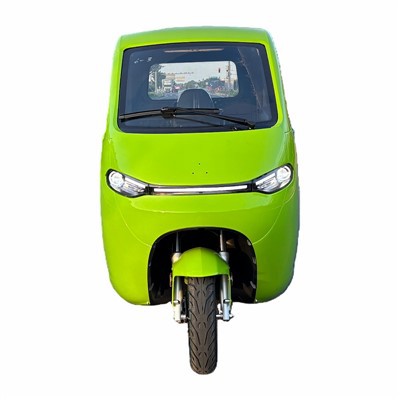
If you’re in the market for a flat bed pickup and want to test the ride for yourself, I invite you to come by our lot. We can set you up with a test drive of a model that matches your needs, and you can feel the difference for yourself. We’ve got a range of models, from heavy-duty work trucks built for construction to mid-tier models perfect for small business owners and tradespeople, so we can help you find one that gives you the hauling capacity you need and the smooth ride you want. Whether you’re hauling tools, equipment, or supplies, there’s a flat bed pickup that will work for your daily routine without making every drive a bumpy one.
Pickup Truck If you’re ready to talk specs, pricing, or schedule a test drive, reach out to us to start a conversation. We’re here to help you find the right truck for your needs, not just sell you the most expensive model on the lot. Don’t let old myths about rough rides keep you from getting the flat bed pickup that will make your work easier and your drives more comfortable.
References
- National Highway Traffic Safety Administration. (2022). Light Truck Suspension Design and Ride Quality. U.S. Department of Transportation.
- Automotive News. (2023). Pickup Truck Market Shifts: Balancing Work Capability and Comfort for Daily Drivers. Crain Communications Inc.
- Tire Industry Association. (2021). The Impact of Tire Pressure and Tire Type on Light Truck Ride Quality. TIA Global.
- Society of Automotive Engineers. (2020). Independent vs. Solid Axle Suspension: Comparative Ride Testing for Light Duty Pickups. SAE International.
Taizhou Xiangyuan New Energy Technology Co., Ltd.
As one of the leading flat bed pick up truck manufacturers and suppliers in China, we warmly welcome you to wholesale cheap flat bed pick up truck for sale here from our factory. All customized products are with high quality and low price. Contact us for pricelist.
Address: NO.7HUANGJIN ROAD,METAL RESOURCES RECYCLING INDUSTRY BASE, LUQIAO, TAIZHOU, ZHEJIANG
E-mail: order@jiajiev.com
WebSite: https://www.jiajiev.com/
