As a supplier of 3 phase decanter centrifuges, I get this question more times a week than I can count—from food processing plant managers, R&D leads, and even small-batch artisanal producers who’ve heard rumors these machines work for way more than just sludge or chemical slurries. For years, the food industry stuck to simple 2 phase decanters: separate solid particles from a single liquid phase, like spinning cheese curds to whey or drying fruit pomace. But lately, more of my customers are asking if a 3 phase model can hold up to food-grade standards and do what it’s supposed to: split three distinct phases (usually two liquids and one solid, not some complicated mix of gases or something) without contaminating the final product. 3 Phase Decanter Centrifuge
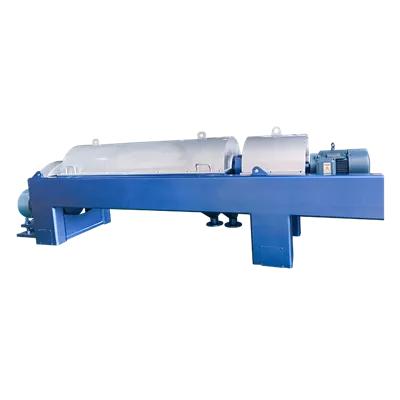
Let’s cut to the chase: Yes, a 3 phase decanter centrifuge absolutely can be used in the food industry—if it’s built right. I’ve installed units for companies making everything from olive oil to soy protein, and not a single one has had a major failure related to food safety or phase separation. But there are a lot of myths out there, and most of them come from people who only know decanters from industrial wastewater or mining jobs, where durability trumps product purity. Food processing isn’t that different, but the margins are tighter, the regulations are non-negotiable, and the “waste” from your decanter is often the product someone is paying for. That’s why my team designs every single unit we sell to check both boxes: heavy-duty separation power and strict food-grade compliance.
First, let’s break down what a 3 phase decanter actually does, because too many people mix it up with a simple two phase model. A standard decanter works on the principle of centrifugal force: as the bowl spins at high speeds, denser solids get pushed to the outer wall, and less dense liquid forms a layer closer to the center. A 2 phase decanter only lets that single liquid layer drain out one port. A 3 phase has an extra, adjustable discharge port that splits that single liquid into two distinct layers. Think of it like layers in a salad dressing: vinegar is denser, so it settles at the bottom, while oil floats on top. A 3 phase decanter replicates that, but instead of waiting hours for gravity to do the work, it does it in minutes, even for liquids that mix super well.
In food, those three phases are almost always one solid and two immiscible liquids. The classic example is virgin olive oil: when you press olives, you get a mix of olive juice, water, and olive pomace (the solid leftover pulp and pits). A 2 phase decanter would separate pomace from the whole liquid mix, but you’d have to let gravity sit for days to split the oil and water, which lets mold grow and ruins the oil’s flavor. A 3 phase decanter does all three at once: pomace is pushed to the bowl’s outer wall and scraped out with a helical screw conveyor, water is drained from an inner port, and oil is pulled from an upper port right next to it. I installed a unit at a small olive mill in Tuscany last year that used to take 72 hours to process 500 liters of olives; now it does that same amount in 45 minutes, and the oil has a fresher, nuttier flavor because it doesn’t sit around. That’s the kind of win that makes my job worth it.
But not all 3 phase decanters are built for food. The industrial models—for mining, wastewater, or petrochemicals—use carbon steel, which has a habit of rusting, and they’re not set up to handle food contact. If rust flakes off into the product, that’s a total failure, and it’s why a lot of people think decanters don’t work in food. At my company, every food-grade unit we make uses 316L stainless steel, which is the gold standard for food and pharmaceutical processing. It’s corrosion-resistant, easy to clean, and it doesn’t leach any metals into the product, even when you’re working with acidic things like citrus juice or fermented soy products. We also add a polished interior surface—Ra ≤ 0.8, per FDA guidelines—to prevent food solids from sticking, which cuts down on bacterial growth and makes cleaning between runs way faster. A plant that makes salad dressing might switch between olive oil and canola oil on the same decanter; a rough, unpolished surface would leave residue that cross-contaminates the next batch, which is a huge no-go for food manufacturers.
Another big myth: 3 phase decanters are too expensive for small food businesses. Yeah, a high-quality food-grade unit isn’t the cheapest piece of equipment, but let’s do the math. A craft soy sauce brewery I work with was using manual separation tanks that took two days to separate soy sauce from soy paste and residual water. They had to throw out 12% of their product every batch because of cross-contamination between phases. After we installed our 3 phase model, their separation time dropped to 2 hours, and product waste went down to 1%. Over a year, that saved them more than enough to cover the cost of the machine, plus it let them scale production without hiring extra staff for manual sorting. Even small-batch producers don’t have to shy away—we can build custom, smaller units for operations that process less than 1,000 liters a day, no fancy industrial setup required.
Of course, there are limitations, and it’s not a one-size-fits-all solution. You can’t use a 3 phase decanter for every food process, and you can’t just take an industrial unit and label it food-grade. For example, if you’re separating three solids, or a liquid and two solids, a decanter won’t work—you need a different type of centrifuge, like a disc stack centrifuge. And some food products have very fine particles that don’t settle well in the bowl; we add adjustable bowl speed and conveyor differential speed settings to our units so customers can tweak it to their product. For example, a company that separates animal fat from meat solids needs a higher bowl speed than someone processing fruit juice, because fat is a lot less dense than pomace. We also work closely with each customer to test their product in our in-house lab before we build or modify a unit—no guessing, no wasting their money on something that won’t work for their specific process.
Wait, let’s talk about that lab testing part, because it’s what sets our units apart from other suppliers. Last quarter, a company that makes liquid protein supplements reached out to us. They were using a 2 phase decanter that separated whey solids from the liquid, but they couldn’t split the protein concentrate from the water without letting it sit for 12 hours, which caused the protein to denature (break down) and lose nutritional value. We took a sample of their mix, ran a test in our lab, adjusted the bowl speed and port sizes, and modified a 3 phase unit to match their exact needs. Now their separation is done in 90 minutes, and their protein retention rate went up 18%. That’s not magic—it’s understanding that food processing isn’t just spinning things fast; it’s preserving the quality and safety of the product.
We also make sure every unit we build meets all the global food safety standards, not just the FDA’s. A lot of our customers export, so we design our decanters to comply with EC 1935/2004, which regulates food contact materials in the European Union, as well as the BRCGS (British Retail Consortium Global Standards) for food manufacturing. We even include full documentation for every unit—material test certificates, cleaning protocols, phase separation performance data—so our customers can pass audits from major grocery chains without any hassle. That’s a big one; if a food processor can’t pass an audit, they can’t sell their product, so that’s non-negotiable for us.
But here’s the thing: the biggest use case for 3 phase decanters in food that most people don’t talk about is processing byproducts. A lot of companies don’t realize that the “waste” from their processing is often a valuable product. For example, when a potato chip factory makes potato starch, the byproduct is potato solids, water, and residual starch. A 3 phase decanter can separate those three, so the potato solids can be turned into animal feed, the starch is reused in other products, and the water is clean enough to discharge without extra treatment. Last year, a mid-sized potato processor told us that using our decanter cut their waste disposal costs by 40%, and they added $250,000 a year in revenue from the byproducts they recovered. That’s the kind of value that makes a 3 phase decanter an investment, not just a piece of equipment.
I get why there’s confusion. A lot of old trade articles and even some suppliers still say decanters are only for industrial use, but that’s outdated. The technology has come a long way, and food-grade units are now standard for processes that need fast, efficient, and safe phase separation. But it’s not just about buying a machine; it’s about working with a supplier who understands both the centrifuge technology and the food industry’s specific needs. That’s why we don’t just sell decanters—we offer on-site installation, operator training, and 24/7 support, because a machine is only as good as the team that runs it.
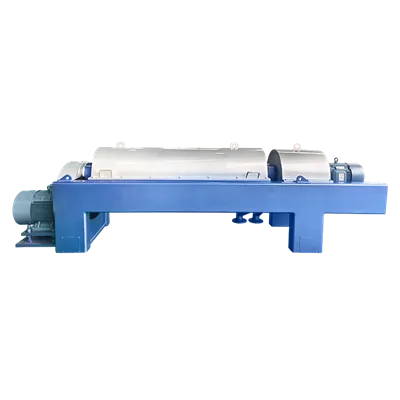
At the end of the day, the answer to “Can a 3 phase decanter centrifuge be used in the food industry?” is a resounding yes—when it’s the right type of unit, built to food-grade standards, and matched to your specific process. If you’re tired of slow separation, high product waste, or cross-contamination issues, that’s exactly what we design our units to solve. We’ve worked with everything from small artisanal producers to large global food brands, and every single one of them has seen a return on their investment in less than two years.
2 Phase Decanter Centrifuge If you’re ready to talk through your food processing needs, test a sample of your product, or see how a 3 phase decanter could cut your costs and boost your product quality, don’t hesitate to reach out. We’re here to help you find the right solution, no matter the size of your operation.
References
- FDA Food Contact Materials Guidance, Title 21 CFR Parts 170–189
- EC 1935/2004 Regulation on Materials and Articles Intended to Come into Contact with Food
- BRCGS Global Standard for Food Safety, Issue 9
- “Centrifugal Separation of Immiscible Liquids in Decanter Centrifuges,” Journal of Food Engineering, Volume 212, 2017, Pages 112–121
- Food and Agriculture Organization (FAO) Guide to Solid-Liquid Separation for Small-Scale Food Processing, 2020
Lishui Yuanrong Environmental Protection Equipment Co., Ltd.
As one of the most professional 3 phase decanter centrifuge manufacturers and suppliers in China, we have world-leading production equipment and strong manufacturing capabilities. Please feel free to buy customized 3 phase decanter centrifuge from our factory. Also, quotation is available.
Address: Lot 6-1, Block 15, Wanyang Zongchuang City, Lishui, Zhejiang, China
E-mail: 361184920@qq.com
WebSite: https://www.yrhdc.com/
