As a supplier of welding robots, I’ve had the privilege of witnessing the transformative power these machines bring to the manufacturing and welding industries. One question that constantly comes up in discussions with potential clients and industry peers is: How accurate is a welding robot? In this blog post, I’ll delve into the factors that contribute to the accuracy of a welding robot, the levels of precision achievable, and how it compares to manual welding. Welding Robot
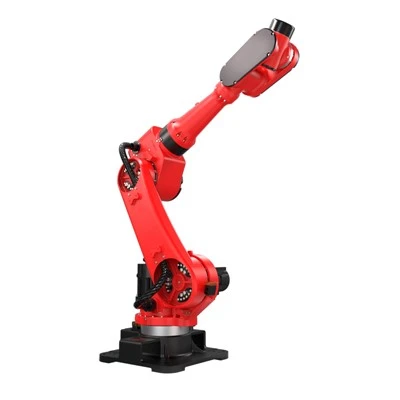
Understanding the Concept of Accuracy in Welding Robots
Accuracy in the context of welding robots refers to the ability of the robot to perform welding tasks with a high degree of repeatability and precision. This includes the ability to follow a programmed path, maintain consistent welding parameters such as voltage, current, and wire feed speed, and produce welds of uniform quality and dimensions.
To achieve high accuracy, welding robots are equipped with advanced sensors, controllers, and software that work together to ensure precise movement and control. These components allow the robot to adapt to changes in the welding environment, such as variations in workpiece position or thickness, and make real-time adjustments to the welding process.
Factors Affecting the Accuracy of Welding Robots
Repeatability
Repeatability is a crucial factor in determining the accuracy of a welding robot. It refers to the ability of the robot to return to a specific position or point in space with a high degree of consistency. A welding robot with high repeatability can perform the same welding task multiple times with minimal variation, resulting in consistent weld quality.
The repeatability of a welding robot is influenced by several factors, including the quality of the robot’s mechanical components, the precision of its drive system, and the accuracy of its feedback sensors. High-quality robots with precision-engineered components and advanced feedback systems can achieve repeatability in the range of ±0.05 mm to ±0.1 mm, depending on the type and size of the robot.
Path Accuracy
Path accuracy refers to the ability of the welding robot to follow a programmed path precisely. This is essential for producing welds that meet the required specifications, especially in applications where complex weld profiles or tight tolerances are required.
The path accuracy of a welding robot is determined by the robot’s kinematic design, the accuracy of its motion control algorithms, and the quality of the programming software. Modern welding robots are designed with advanced kinematic models and motion control algorithms that allow them to achieve high levels of path accuracy, typically within ±0.2 mm to ±0.5 mm.
Welding Parameter Control
In addition to repeatability and path accuracy, the accuracy of a welding robot also depends on its ability to control the welding parameters accurately. This includes maintaining consistent voltage, current, wire feed speed, and shielding gas flow rate throughout the welding process.
Welding robots are equipped with advanced welding power sources and controllers that can precisely regulate these parameters. These systems use feedback sensors and closed-loop control algorithms to ensure that the welding parameters remain within the specified range, even in the presence of external disturbances or variations in the welding environment.
Workpiece Fixturing and Alignment
The accuracy of a welding robot is also affected by the quality of the workpiece fixturing and alignment. Proper fixturing and alignment ensure that the workpiece is held in the correct position and orientation during the welding process, minimizing the risk of errors and ensuring consistent weld quality.
Workpiece fixturing systems should be designed to provide a stable and rigid support for the workpiece, while also allowing for easy loading and unloading. Alignment systems, such as laser sensors or vision systems, can be used to detect the position and orientation of the workpiece and make real-time adjustments to the robot’s path or welding parameters.
Achievable Levels of Accuracy in Welding Robots
The level of accuracy achievable with a welding robot depends on several factors, including the type and size of the robot, the application requirements, and the quality of the components and systems used. In general, modern welding robots can achieve very high levels of accuracy, making them suitable for a wide range of applications, from simple spot welding to complex multi-pass seam welding.
For example, in applications where high precision is required, such as aerospace or automotive manufacturing, welding robots can achieve repeatability and path accuracy within ±0.1 mm. These robots are typically equipped with advanced sensors and control systems that allow them to perform welding tasks with a high degree of precision and consistency.
In less demanding applications, such as general fabrication or construction, welding robots can still achieve acceptable levels of accuracy, typically within ±0.5 mm to ±1 mm. These robots are often more cost-effective and may be used to improve productivity and quality in a variety of welding processes.
Comparing Welding Robots to Manual Welding
When it comes to accuracy, welding robots have several advantages over manual welding. One of the main advantages is the ability to perform welding tasks with a high degree of repeatability and precision. Unlike human welders, who may be subject to variations in skill, fatigue, and concentration, welding robots can perform the same welding task multiple times with minimal variation, resulting in consistent weld quality.
Another advantage of welding robots is their ability to work in harsh or hazardous environments. Welding can be a dangerous and physically demanding job, and exposure to welding fumes, radiation, and high temperatures can pose a risk to human health. Welding robots can be programmed to work in these environments, reducing the risk of injury and improving worker safety.
In addition, welding robots can work faster and more efficiently than human welders, increasing productivity and reducing production costs. They can also perform welding tasks with a high degree of consistency, reducing the need for rework and improving overall quality.
However, it’s important to note that welding robots are not a substitute for human welders. While they can perform many welding tasks with a high degree of accuracy and efficiency, they still require human intervention for programming, setup, and maintenance. Human welders also bring a level of creativity and problem-solving ability to the welding process that robots cannot replicate.
Ensuring High Accuracy in Welding Robot Applications
To ensure high accuracy in welding robot applications, it’s important to follow a few best practices. First, it’s essential to select the right welding robot for the application. This includes considering factors such as the size and weight of the workpiece, the required welding process, and the level of accuracy and repeatability needed.
Second, proper programming and calibration are critical for achieving high accuracy. The welding robot should be programmed using advanced software that allows for precise control of the welding parameters and path. The robot should also be calibrated regularly to ensure that it is operating within the specified accuracy limits.
Third, regular maintenance and inspection of the welding robot and its components are essential for ensuring high accuracy and reliability. This includes checking the robot’s mechanical components, electrical systems, and sensors for wear and damage, and replacing any worn or damaged parts as needed.
Finally, it’s important to provide proper training and support for the operators and maintenance personnel who work with the welding robot. This includes training on the programming, operation, and maintenance of the robot, as well as safety procedures and best practices.
Conclusion
In conclusion, welding robots are capable of achieving very high levels of accuracy, making them a valuable tool for a wide range of applications in the manufacturing and welding industries. By understanding the factors that affect the accuracy of a welding robot and following best practices for selection, programming, calibration, maintenance, and training, manufacturers can ensure that their welding robots perform welding tasks with a high degree of precision and consistency, improving productivity, quality, and worker safety.
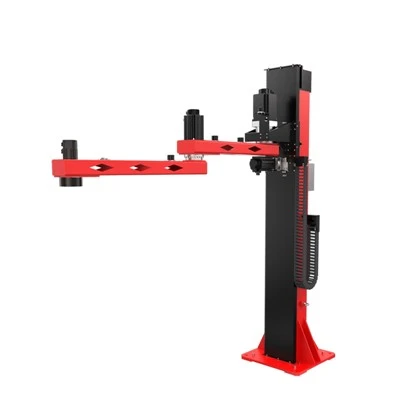
Palletizing Robot If you’re interested in learning more about our welding robots and how they can improve the accuracy and efficiency of your welding processes, please don’t hesitate to contact us. Our team of experts is ready to help you find the right solution for your specific needs.
References
- AWS Welding Handbook, American Welding Society
- Robotics Technology Handbook, Industrial Press Inc.
- Welding Automation: Principles and Applications, CRC Press
Robotic Technology (GD) Co., Ltd.
Robotic Technology (GD) Co., Ltd. is one of the most experienced welding robot manufacturers and suppliers in China, also supports custom service and one year warranty. Please feel free to wholesale CE approved welding robot for sale here from our factory. Contact us for quotation.
Address: Room 102, No. 30,Hengfeng 2nd Road,Daguo, Changping Town, Dongguan City,Guangdong,China
E-mail: admin@iroboticplus.com
WebSite: https://www.rb-tic.com/
