Hey there! I’m a guy running a smart circuit breaker supply business. I often get asked a bunch of questions about these nifty devices. One question that pops up more often than I’d expect is, "What is the minimum current that a smart circuit breaker can detect?" Well, let’s dive right into it. Smart Circuit Breaker
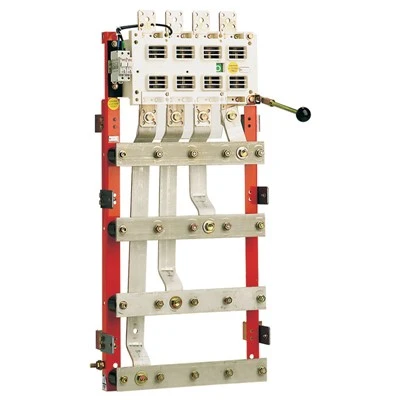
First off, let’s understand what a smart circuit breaker is. It’s not your grandpa’s old – fashioned breaker. A smart circuit breaker is a high – tech upgrade. It can do a whole lot more than just cut off the power when there’s an overload. It can monitor the electrical current in real – time, send data to your phone or other devices, and even be controlled remotely. These features make it a game – changer in the electrical safety and management world.
Now, let’s talk about the minimum current detection. The minimum current that a smart circuit breaker can detect varies depending on the model and the intended use. For most household – grade smart circuit breakers, the minimum detectable current is usually around 0.01 amps to 0.1 amps. Why such a small range?
Well, in a home environment, there are lots of small electronic devices that draw very little current. Things like clock radios, smoke detectors, or some standby – mode electronics. A smart circuit breaker with a low minimum detection current can still keep an eye on these devices. It can detect any abnormal current draw, which might be a sign of a developing electrical problem, even if it’s just a tiny issue.
For industrial – grade smart circuit breakers, the minimum detection current can be a bit different. In an industrial setting, there are huge machines that draw large amounts of current. But even here, detecting small changes in current is crucial. Industrial smart circuit breakers can often detect currents as low as 0.001 amps or even less. This is because in a factory, a small current leak or an early sign of a component failure can lead to big problems down the line. By detecting these small changes early, the smart circuit breaker can prevent costly downtime and potential safety hazards.
How do these smart breakers actually detect such small currents? It all comes down to the technology inside. Most smart circuit breakers use current transformers or Hall – effect sensors. Current transformers work by coupling a primary coil (where the main current flows) with a secondary coil. The current in the secondary coil is proportional to the current in the primary coil. By measuring the current in the secondary coil, the breaker can accurately determine the current in the main circuit.
Hall – effect sensors, on the other hand, work based on the Hall effect. When a current – carrying conductor is placed in a magnetic field, a voltage is generated perpendicular to both the current and the magnetic field. The magnitude of this voltage is proportional to the current in the conductor. Smart circuit breakers use these sensors to measure even the tiniest currents.
Another important factor to consider is the accuracy of the minimum current detection. Accuracy is key because if the breaker can’t accurately detect the current, it might not be able to catch potential problems. The accuracy of current detection in smart circuit breakers can vary. Good – quality, well – designed breakers can have an accuracy of within a few percentage points. For example, if the minimum detectable current is set at 0.1 amps, an accurate breaker might be able to detect currents with an error of only 1% or 2%, meaning it can distinguish between 0.099 amps and 0.101 amps.
Let’s talk about why the ability to detect low currents is so important. In a house, it’s all about safety and energy efficiency. Detecting even a small current leak can prevent electrical fires. A small, undetectable leak in the wiring can generate heat over time, and if left unchecked, it can start a fire. Smart circuit breakers with low minimum current detection can catch these leaks long before they become a major problem.
In terms of energy efficiency, these breakers can detect when a device is drawing more power than it should in standby mode. By alerting the user, the breaker helps save energy and reduce electricity bills. In an industrial context, the ability to detect low currents is essential for maintaining the smooth operation of equipment. Early detection of current anomalies can prevent major breakdowns and keep production running smoothly.
Now, I know what you might be thinking. "This all sounds great, but how do I choose the right smart circuit breaker with the right minimum current detection for my needs?" Well, it depends on your specific situation. If you’re looking for a breaker for your home, you’ll want to choose one with a minimum detection current that’s suitable for the types of devices you have. If you have a lot of small, low – power electronics, a breaker with a lower minimum detection current, say around 0.01 amps, might be a good choice.
For an industrial setting, you’ll need to consider the size and complexity of your machinery. Talking to an electrical engineer or a professional in the field can be really helpful. They can assess your needs and recommend the best smart circuit breaker with the appropriate minimum current detection capabilities.
One thing I also want to mention is the future of smart circuit breaker technology. As technology advances, we can expect even more precise current detection. Manufacturers are constantly working on improving the sensors and the algorithms used in these breakers. In the future, we might see smart circuit breakers that can detect currents down to the micro – amp level with even greater accuracy.
So, to sum it all up, the minimum current that a smart circuit breaker can detect ranges from around 0.001 amps for industrial breakers to 0.01 – 0.1 amps for household breakers. This ability to detect small currents is crucial for both safety and efficiency in both home and industrial settings.
If you’re in the market for a smart circuit breaker and want to learn more about the minimum current detection and other features, reach out to us. We’d be more than happy to have a chat with you, understand your specific requirements, and help you find the perfect smart circuit breaker for your needs. Let’s have a discussion about how we can make your electrical systems safer and more efficient.
Smart Circuit Breaker References
- Electrical Power Systems book by U. S. Bhatt
- Handbook of Electric Power Calculations by Stephen L. Herman
- Journals on Smart Grid Technologies and Advancements in Electrical Protection Devices
Wenzhou Lanen Electrical Co., Ltd.
Wenzhou Lanen Electrical Co., Ltd. is one of the most professional smart circuit breaker manufacturers and suppliers in China, also supports customized service with low price. Please feel free to buy CE approved smart circuit breaker made in China here from our factory. Contact us for more discount information.
Address: Zhiguang Liushi Town Yueqing City Wenzhou City Zhejiang Province
E-mail: lanen@luyele.cn
WebSite: https://www.lanenelectrical.com/
