Hey there! I’m a supplier of Reverse Osmosis (RO) Water Systems, and one of the most common questions I get from customers is, "How much water does a Reverse Osmosis Water System waste?" It’s a valid concern, especially in today’s world where water conservation is super important. So, let’s dive into this topic and clear up any confusion. Reverse Osmosis Water System
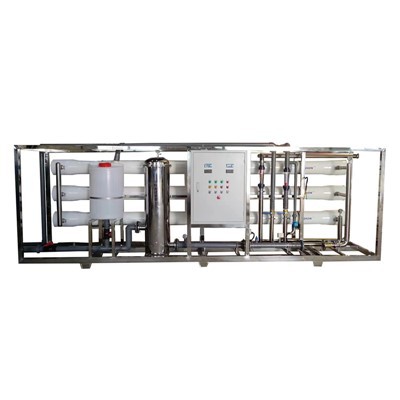
First off, let me explain how a Reverse Osmosis Water System works. In simple terms, it’s a process that uses a semi – permeable membrane to remove impurities from water. Water is forced through this membrane, and the contaminants are left behind. The clean water that passes through the membrane is what we call the "permeate," and it’s the water we use for drinking, cooking, and other household needs. The water that doesn’t pass through the membrane and contains all the impurities is the "reject water" or "brine," and this is the water that gets "wasted."
Now, the amount of water a Reverse Osmosis Water System wastes can vary quite a bit. It depends on several factors, including the type of system, its efficiency, the quality of the incoming water, and the pressure at which the water is fed into the system.
Let’s start with the type of system. Older and less advanced RO systems tend to waste a lot more water. These systems might have a ratio of 3 – 5 gallons of waste water for every gallon of clean water produced. That means if you’re getting 1 gallon of drinkable water, you could be sending 3 to 5 gallons straight down the drain. Yikes! That’s a lot of water.
But don’t worry, technology has come a long way. Modern, high – efficiency RO systems are much better. They can have a waste – to – product water ratio of as low as 1:1 or even better in some cases. That means for every gallon of clean water you get, you’re only wasting 1 gallon of water. So, if you choose a newer system, you’re already making a big step towards conserving water.
The quality of the incoming water also plays a huge role. If your tap water is really dirty, with a high level of dissolved solids (like salts, minerals, and other contaminants), the RO system has to work harder to clean it. This usually results in more waste water. For example, if you live in an area where the water has a high concentration of calcium and magnesium (hard water), the system might need to push more water through the membrane to get the same amount of clean water. On the other hand, if your water is relatively clean to begin with, the system won’t have to work as hard, and you’ll have less waste water.
Another factor is the water pressure. RO systems work best when the water is fed in at a certain pressure. If the pressure is too low, the system might not be able to force enough water through the membrane efficiently, which can lead to more waste. On the other hand, if the pressure is too high, it can damage the membrane and also increase the amount of waste water. Most systems are designed to work optimally at a pressure of around 60 – 80 psi (pounds per square inch).
Now, let’s talk about some ways to reduce the water waste from an RO system. One option is to reuse the reject water. The waste water from an RO system is still relatively clean compared to, say, sewage water. You can use it for other purposes around the house. For example, you can collect it in a bucket and use it to water your plants. It’s got some minerals in it, which can actually be good for your plants. You can also use it to wash your car or clean your floors.
Another way is to upgrade to a more efficient RO system. As I mentioned earlier, newer systems are much more efficient at producing clean water with less waste. They use better – designed membranes and more advanced technology to optimize the water purification process.
If you’re really concerned about water waste, you can also look into systems that have built – in water recovery features. These systems are designed to recycle some of the waste water back into the system, reducing the overall amount of water that goes down the drain.
So, to sum it up, the amount of water a Reverse Osmosis Water System wastes can vary from a few gallons per gallon of clean water in old systems to very little in modern, high – efficiency ones. By choosing the right system, taking care of the incoming water quality and pressure, and reusing the reject water, you can significantly reduce the amount of water your RO system wastes.
As a supplier, I understand that people want to make an environmentally friendly choice. That’s why I’m here to help you pick the best RO system for your needs. Whether you have hard water, live in an area with a water shortage, or just want to be more water – conscious, I’ve got a solution for you.
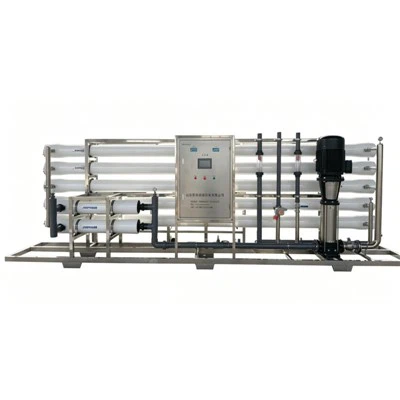
If you’re interested in learning more about our Reverse Osmosis Water Systems or want to discuss your specific water treatment needs, don’t hesitate to reach out. We can have a chat, figure out what system would work best for you, and even talk about the long – term cost savings and environmental benefits. Let’s work together to get you clean, safe water while also doing our part for the planet.
Industrial RO Equipment References:
- "The Science of Reverse Osmosis" by Water Treatment Solutions Inc.
- "Water Conservation and Reverse Osmosis Systems" from the Environmental Research Institute.
Shandong Yanuo Environmental Protection Equipment Co., Ltd.
We’re well-known as one of the leading reverse osmosis water system manufacturers and suppliers in China, featured by quality products and good price. Please rest assured to buy bulk reverse osmosis water system made in China here from our factory. Customized orders are welcome.
Address: North Side of the Road, 1,000 Meters West of the Intersection of Fenghuangshan West Road and Provincial Highway S102, Wangfu Subdistrict, Qingzhou City, Weifang City, Shandong Province.
E-mail: ynhb.499973983@gmail.com
WebSite: https://www.zkyaruo.com/
