If you’ve ever spent hours on a job site with a worn hydraulic cylinder, a misaligned marine engine mount, or a corroded excavator track housing, you know line boring isn’t just a trade—it’s the backbone of keeping heavy machinery running. As a line boring supplier, I’ve spent 12 years on road sides, shipyards, and construction sites, talking to maintenance managers, equipment operators, and lead fitters who’ll tell you the same thing: when line boring processes are stuck in old habits, downtime costs far more than the job itself. Innovation in line boring isn’t just about new tools—it’s about rethinking how we adapt to the chaos of real-world job sites, cut downtime, and deliver precision that actually works when the machine is back online. Line Boring
Let’s start with the biggest myth I hear all the time: “We’ve always done it this way.” Last year, we worked with a mining outfit that had used the same manual line boring setup for 20 years. Every time they needed to bore a swing frame on their 200-ton haul trucks, they’d ship the frame 300 miles to a shop, wait 5 days for it to come back, and lose a week of production per truck. When they finally brought us on, our first step wasn’t to sell them a fancy new machine—it was to ask why they’d never tried on-site line boring. The answer? “On-site equipment is less accurate than shop work.” That’s where the first innovation gap hits: assuming shop-level precision requires shop-level infrastructure.
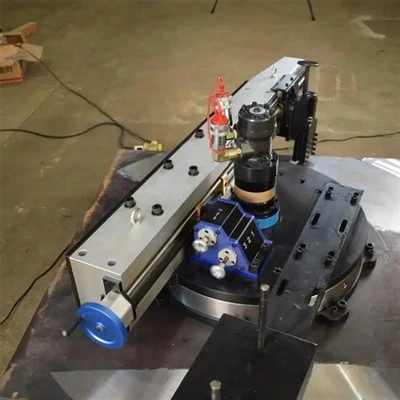
Back in 2018, when I first started testing portable computer numerical control (CNC) line boring machines, I’ll admit I was skeptical. These aren’t the giant, fixed-base boring mills you see in a factory—they’re compact, self-contained rigs that mount directly to the part you’re repairing, no shipping required. Early models had kinks: they were too heavy to haul up a hillside job site, and their programming was so complicated that a fitter with 10 years of experience on manual line boring would need two days of training to operate them. But that’s where real innovation in this space comes from: listening to the people using the equipment, not just engineers in an office.
We worked with a CNC manufacturer to tweak their portable rig last year, and the changes were small but transformative. First, we swapped out the heavy steel mounting brackets for lightweight, aircraft-grade aluminum, cutting the setup time for a swing frame from 4 hours to 90 minutes. Second, we created a custom touchscreen interface that pre-loads common boring specs for excavators, haul trucks, and marine engines—no coding required. A fitter who’s been doing line boring for 15 years can pick up that rig in 2 hours, no formal engineering training needed. For that mining client, switching to this on-site CNC setup cut their downtime per truck from 7 days to 12 hours, and the precision rating (measured in thousandths of an inch) was identical to their old shop work. That’s the kind of innovation that matters for line boring—not just flashy tech, but tech that solves real, on-site pain points.
Another area where innovation is long overdue is data-driven calibration. For decades, line boring work relied on a fitter’s eye, a spirit level, and a lot of trial and error. You’d mount the boring bar, take a few measurements, adjust, and hope for the best. But what if we could use real-time data to eliminate that guesswork? A few years ago, I was on a shipyard in Houston, boring the engine mounts for a 500-foot cargo ship. The ship’s engineer had a strict tolerance of 0.005 inches across 12 mounts—miss that, and the engine would vibrate so bad it would crack the bulkhead within 6 months. Our old method would have taken 2 full days to get that calibration right, with multiple test bores. Instead, we brought in a laser alignment tool that syncs directly to the CNC line boring machine. As the machine cuts each mount, the laser takes continuous measurements of the hole’s alignment, feeding data back to the touchscreen. If the hole is even 0.001 inches off target, the machine adjusts its path automatically—no stops, no reworks. We finished the job in 4 hours, and three months later, the engineer called to say the engine’s vibration was 70% lower than their previous ship.
The key here is that this innovation doesn’t require a huge capital outlay for every client. Smaller operations, like local construction firms or small marine yards, might not be able to invest in a full CNC rig right away, so we’ve started offering rental packages for portable laser calibration tools, plus half-day on-site training for their fitters. That’s part of promoting innovation, too: not just selling new equipment, but making it accessible, so even the smallest teams can adopt better processes without breaking the bank.
One of the most underrated drivers of innovation in line boring is cross-trade collaboration. Line boring doesn’t happen in a vacuum—it works alongside hydraulic repair, welding, and heavy equipment maintenance, but for years, these teams have operated in silos. Last year, we partnered with a hydraulic repair specialist on a construction job site in Dallas. The team was repairing a 100-ton loader’s bucket linkage, which required both welding a cracked housing and line boring the mounting holes. The original plan was to weld the housing first, then ship it to us for boring, leading to a 3-day delay. Instead, we brought our portable line boring rig to the weld team’s setup, and adjusted our approach to bore the holes first, then do the weld (with a custom heat shield to protect the boring bar’s precision from welding heat). We finished the entire job in 1 day, cutting downtime by two-thirds. That’s the kind of innovation that comes from talking to other trades, not just staying in your lane as a line boring supplier. We now host monthly roundtables for fitters, welders, and maintenance managers in the Texas area to share these kinds of on-site hacks—and it’s led to 12 new process tweaks that we’ve rolled out to all our clients.
Of course, promoting innovation also means addressing the biggest barrier to adoption for many line boring teams: fear of failure. I’ve had fitters tell me, “I’ve used manual line boring for 20 years, why would I trust a machine that thinks for itself?” That’s a valid concern—line boring is a trade that relies on reputation, and a bad job can cost a contractor their next bid. So we’ve structured our training and support to meet teams where they are. For new clients testing portable CNC rigs, we send one of our senior technicians to the first two jobs: half to train the team, half to work alongside them, stepping in only if the team needs extra support. Last quarter, a small marine shop in Galveston tested our rig for the first time on a small fishing trawler’s engine mounts. Their lead fitter, who had never used CNC equipment before, finished the job without our tech stepping in—and later told me he’d be switching all his line boring work to our portable rig. That’s how you build trust with innovation: not forcing new tools, but proving they work side-by-side with a team’s existing expertise.
We also can’t talk about innovation in line boring without touching on sustainability, which is becoming a non-negotiable for clients across every industry. Traditional line boring often generates a lot of waste: shipping heavy parts to shops adds to carbon emissions, manual setups can lead to reworks that waste metal, and old equipment is often discarded instead of repurposed. Our latest innovation is a modular line boring system that lets clients upgrade only the parts they need, instead of buying a whole new machine. For example, a client who already has a manual boring bar can add our laser calibration module for a fraction of the cost of a full CNC rig. We also use 100% recyclable metal chips from boring jobs, and partner with local metal scrap yards to turn that waste into raw material for new construction projects. A client in the wind energy sector recently told us that using our on-site line boring setup cut their carbon footprint for each turbine repair by 80%, compared to their old shop-based process. That’s innovation that doesn’t just improve efficiency—it helps clients hit their own sustainability goals, which is a huge selling point in today’s market.
I’ll be honest: not every innovation we’ve tried has worked. A few years back, we tested a remote-controlled line boring rig that let operators control the machine from a distance, which sounded great for dangerous job sites like working on highway overpasses. But it was too slow, and the cost was 3x higher than our current portable rig. We scrapped that model, took the feedback from clients, and went back to the drawing board. Innovation in line boring isn’t about chasing the shiniest new gadget—it’s about solving real problems, one small, practical change at a time.
So what does all this mean for promoting innovation in line boring, whether you’re a veteran supplier, a fitter, or a maintenance manager looking to improve your processes? First, stop accepting “that’s how we’ve always done it” as a reason not to change. Second, listen to the people on the job site—they’re the ones who know the pain points better than any engineer in an office. Third, make new tools and processes accessible, not just for large corporations, but for small teams that make up the backbone of the heavy equipment industry. Fourth, collaborate across trades to break down silos and find faster, more efficient ways to work together. And finally, prioritize innovation that brings real value: less downtime, better precision, lower costs, and a smaller environmental footprint.

If you’re ready to try a new line boring process, test out a portable CNC rig, or learn how to cut downtime on your next project, our team is here to help. We work with construction companies, marine yards, mining operations, and more, across North America, and we’ll tailor our solutions to your specific needs, no matter the job size or location. Whether you want to rent equipment, get training for your team, or discuss the right line boring approach for your next project, reach out to our team to connect and talk through your goals. Let’s build better, more innovative line boring processes together.
Line Boring References:
- Heavy Equipment Maintenance Association. (2022). Portable Machining and Precision Boring Best Practices. HEMA Technical Report Series.
- American Society of Mechanical Engineers. (2021). Tolerance Standards for On-Site Machining Applications. ASME B89.4.19-2021.
- International Maritime Organization. (2020). Sustainable Repair Practices for Commercial Vessels. IMO Marine Technology Circular 1452.
- Occupational Safety and Health Administration. (2023). Job Site Efficiency and Safety for Portable Machining Operations. OSHA Technical Guide for Construction and Maritime Industries.
- National Mining Association. (2022). Reducing Downtime in Heavy Mining Equipment Maintenance. NMA Maintenance Innovation Report.
Shangqiu JDA Machinery Technology Co., Ltd.
With abundant experience, we are one of the most professional line boring manufacturers and suppliers in China. We warmly welcome you to buy cheap line boring for sale here from our factory. Quality products and reasonable price are available.
Address: No. 55 Pingyuan Middle Road, Liangyuan District, Shangqiu, Henan, China
E-mail: sales@jdamachines.com
WebSite: https://www.jdamachines.com/
