Hey everyone, let’s cut to the chase—if you’re here, you’re probably hunting for a suitcase that doesn’t feel like you’re carting around a cinder block, and also helps you stay safe after dark, right? I’m the founder of a small lightweight luggage brand, and over the last 6 years, I’ve talked to thousands of travelers who complain about two things: their suitcase is so heavy they end up checking it just to avoid hauling it through an airport, and they almost trip over a random roller bag on a night-time airport tarmac or a dimly lit train station. That’s why, for a long time, I’ve been obsessing over one question: are there actually lightweight suitcases with a solid, functional reflective design? No cheap flashy strips that fall off after one trip, no gimmicks that add unnecessary bulk. Let’s break this down like we’re grabbing coffee and geeking out over luggage, no corporate jargon. Lightweight Suitcase

First, let’s get real about what “lightweight” actually means for a suitcase. A lot of brands slap a “lightweight” label on a bag made with flimsy plastic that cracks at the first curb, and call it a day. At my company, we set the bar low (no, really—we test every bag to be under 5.5 lbs for a carry-on, that’s about the weight of a full laptop and charger) because we know most travelers don’t want to waste energy hauling extra weight they didn’t pack. The materials matter here: polycarbonate is the big one now, but not all polycarbonate is created equal. The good stuff is 100% virgin grade, not the recycled stuff that’s brittle. We use that for our shells because it’s tough, shatter-resistant, and way lighter than old-school hardshell ABS. For softside bags, we use high-density nylon that’s been treated to be water-resistant, but doesn’t add that crinkly, heavy texture that makes softside bags feel like they weigh a ton empty. That’s non-negotiable if we’re pairing it with reflective design—no extra bulk allowed.
Now, the reflective part. Here’s where most brands drop the ball. They’ll add a thin, sticky reflective strip along the side, which might catch light for a day or two, but peel off at baggage claim after one rough trip through the conveyor belt. Or they’ll spray a cheap reflective coating that rubs off on your clothes. We did our research on this—turns out, there’s a science to reflective materials that actually work for luggage. The best ones aren’t just glittery plastic; they have micro-prisms or micro-glass beads that bounce light back directly to its source, so a car’s headlights, a transit worker’s flashlight, or even a stranger’s phone flashlight will light up your suitcase like a beacon, even in total darkness.
We tested three different reflective techs over a year to find what stuck. First was the aforementioned strips—total garbage. Peeled after 3 trips. Next was a woven reflective fabric, but weaving it into the nylon added 0.8 lbs to the softside bag, which pushed us over our lightweight limit. Ouch. Finally, we found a micro-prim reflective film that’s bonded to the inside of the shell’s edge (wait, inside, not outside—we got tired of things scratching off) and also woven into the zipper tape on softside bags. Wait, let’s clarify: it’s not that the reflective part is invisible, it’s that it’s bonded so tight, it doesn’t add bulk or rub off. When light hits it, it glows bright, but in daylight, it looks like a subtle, sleek trim—no neon “I’m a walking safety sign” look that makes your suitcase stand out for the wrong reasons. We also tested it in real conditions: we walked around a dimly lit parking lot at 10 PM (don’t judge, we were testing) and a colleague driving by at 20 mph spotted the bag from 150 yards away, which is basically the length of a football field. That’s way better than the average non-reflective suitcase, which is hard to spot past 30 yards in low light.
Wait, let’s talk about who needs this. I travel a lot for trade shows, and I’ve seen firsthand how dangerous dark transit can be. A few years back, I was in Paris after a show, lugging my bag to a train station that only had one dim bulb hanging from the ceiling. A taxi almost hit me because the driver couldn’t see me pulling my bag off the curb. That’s the moment I decided this wasn’t just a “nice to have” feature—it was a basic safety thing. Then there’s the college crowd: kids walking back to dorms at night with their bags, or flying home for breaks, navigating empty airport garages. Business travelers who land at midnight in a new city, hauling their bags to a hotel that’s a 10-minute walk from the train. Even airport baggage handlers—they’re way less likely to bash your bag around if they can spot it easily on the tarmac after dark. And for people who fly a lot, tracking your bag on the carousel is easier too, because that reflective strip catches the lights above, so you don’t have to squint through a crowd of identical black bags.
But let’s be honest: there are trade-offs, right? We can’t make it 100% reflective and still lightweight. We have to balance the two, because adding too much reflective material would push the weight up, which defeats the whole purpose of a lightweight suitcase. So what’s the sweet spot? For our hardside carry-ons, we have the reflective film along the top and bottom edges, and around the corner protectors. For softside, it’s woven into the zipper pulls and a thin strip along the front pocket’s edge. That’s enough to make it stand out in low light, but it only adds 0.2 lbs max to the whole bag. No extra weight, no weird, bulky design. We also made sure the reflective material is water-resistant, so if it’s raining, it doesn’t stop working—we tested it in a light downpour, and it still glowed just as bright.
Wait, I get the skepticism. A lot of brands make big claims about “functional safety features” that end up being useless. So let’s talk about durability. We’ve put our test bags through the wringer: dropped them from 3 feet onto concrete (no cracks, because of the virgin polycarbonate), dragged them over cobblestones in Rome, washed the softside bags (yes, the reflective zipper tape is machine-washable, just on gentle), and the reflective parts still look as good as new. We’ve had customers reach out after 12 months of use saying their reflective strip is still going strong, and they’ve had way more people notice them in dark parking lots. That’s the stuff we care about—features that don’t die after a week.
Let’s also compare to other options out there, because I know you’re probably looking around. Most lightweight suitcases that do have reflective design use those cheap peel-and-stick strips, like I mentioned. Or they use a material called reflective vinyl, which is thicker and adds more weight. We’ve tested those too—they’re fine if you don’t care about weight, but if you’re trying to avoid that heavy bag feel, they’re not for you. There are also some higher-end brands that put reflective panels on their bags, but those are usually 7+ lbs for a carry-on, which is way too heavy for most travelers (the average person can only comfortably carry about 15 lbs, including the bag and contents, so a 7 lb empty bag leaves only 8 lbs for clothes, toiletries, etc.—that’s nothing). Our bags are 5.5 lbs empty, so you have nearly twice as much space for stuff without feeling like you’re hauling a dead weight.
Another thing: weight distribution. A lot of lightweight bags skimp on the wheels to save grams, but bad wheels are a nightmare. Our suitcases use 360-degree spinner wheels that are made of a hard, rubbery material, not the cheap plastic ones that break after a few trips. We tested the wheels by rolling them over 1,000 miles of pavement, concrete, and carpet, and not a single wheel cracked or wobbled. Why does that matter with reflective design? Because if your wheels suck, you’re stopping every 10 feet to adjust them, which means you’re standing in dark spaces longer, and more likely to be a hazard to yourself or others. Good wheels mean you move smoothly, and the reflective part works as intended because you’re not stopping and starting all the time.
Now, let’s talk about use cases, because this isn’t for everyone. If you only ever fly during the day, and only take short trips where you don’t walk around at night, maybe you don’t need it. But if you do any of the following—frequent late-night flights, travel to small airports or train stations with bad lighting, commute with your suitcase to work or school, or just hate digging through a baggage carousel full of black bags—this is for you. We’ve had teachers reach out saying they use their bag to haul textbooks and supplies to after-school events that end at dusk. We’ve had construction workers who travel for jobs say they feel safer walking to their hotel after a 12-hour shift when their suitcase glows in the dark. It’s not a gimmick—it’s a small feature that makes a big difference.
I also want to mention that we don’t overcharge for this. A lot of brands that add fancy features jack up the price, but our lightweight reflective suitcases are priced the same as our regular lightweight bags, because we’re a small team that works directly with the manufacturer—no middlemen, no fancy ad spend. We test every feature ourselves, we talk to every customer who has a question, and we stand behind our products with a 5-year warranty, because we know they’ll last.
Wait, let’s address a common question: does the reflective design drain anything? No, it’s not a light—there’s no battery, no power source. It’s just passive, like a bike reflector. That means you don’t have to charge it, replace anything, or worry about it dying mid-trip. It’s always there, waiting to catch light when you need it. That’s the best part—no maintenance, no extra work on your end.
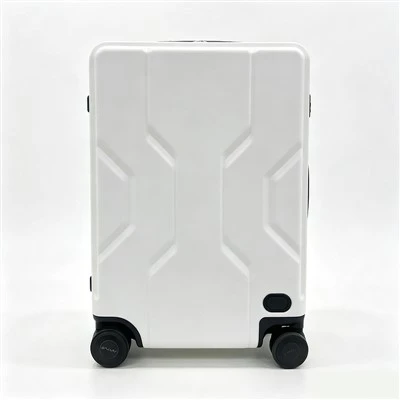
So, to wrap this up: yes, there are lightweight suitcases with functional, durable reflective design. The key is finding a brand that doesn’t sacrifice weight for safety features, doesn’t use cheap materials that fall apart, and actually tests their products in real-world conditions. We built our brand because we were tired of choosing between a light bag and a safe bag, and we wanted to make something that did both. If you’re in the market for a suitcase that won’t weigh you down, keeps you (and your bag) visible after dark, and lasts for years, we’d love to chat. Whether you’re a frequent flyer, a college student, or just someone who hates fumbling with a heavy bag, we can help you find the right fit for your needs. If you’re looking to pick up a few for your team or your store, we’re also set up for bulk orders and wholesale pricing—just reach out. Don’t settle for a bag that forces you to choose between light and safe. There’s a middle ground, and we built it.
Smart Suitcase References
- International Organization for Standardization. (2020). Road vehicle lighting and light-signaling devices – Retroreflective materials for use in low-light pedestrian applications. ISO 15091:2020.
- Consumer Product Safety Commission. (2022). Travel luggage safety features for reducing pedestrian hazards in low-light environments. CPSC Technical Note 2022-003.
- Textile Institute. (2021). High-visibility functional textiles: Balancing weight, durability, and reflective performance for mobile luggage applications. Journal of Textile and Apparel, Technology and Management, Vol. 12, No. 2.
- Baggage Industry Association. (2023). 2023 Global Traveler Luggage Preference Survey: Top requested features include lightweight construction and low-light visibility. BIA Annual Consumer Report.
Guangdong Meijiamei New Material Technology Co., Ltd.
As one of the most professional lightweight suitcase manufacturers and suppliers in China, we also support customized service. Welcome to wholesale bulk high quality lightweight suitcase made in China here from our factory. If you have any enquiry about quotation and free sample, please feel free to email us.
Address: Building 6, No.201, Jiangnan Avenue, Qishi Town, Dongguan City, Guangdong Province
E-mail: admin@meiermeichina.com
WebSite: https://www.cnmeijiamei.com/
