When I started at our Feeding and Discharging System company three years ago, I couldn’t have guessed how many folks would reach out to us after buying our gear and go, “Wait, how do we actually run this thing without breaking it?” Don’t get me wrong—our systems are built solid, but they’re not like a toaster you can plug in and forget. Training the operators who run these machines is half the job, right? Skip that, and you’re gonna have downtime, wasted material, or even something way worse. Over the years, I’ve seen what works and what does NOT work, all from talking to plant managers, operators, and new hires who’ve been thrown in the deep end. Let me break this down like I would to a new team member—no boring jargon, just what actually gets the job done. Feeding and Discharging System
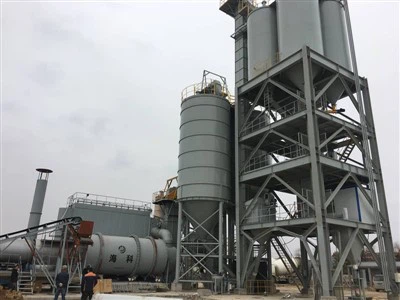
First off, let’s get one thing straight: one-size-fits-all training is garbage. A feeding system that moves grain in a food processing plant is way different than one that handles raw metal parts in a fabrication shop. Our systems are customizable, so why would training be any different? Last quarter, we had a bakery client and a steel mill client both sign up for our basic system—their operator training needs couldn’t have been more opposite. The bakery crew needed to focus on consistent flow to keep dough mixers from running empty, while the steel team had to watch out for heavy parts shifting and tripping the overload sensors. If we’d sat both groups through the exact same module, the bakers would’ve been bored out of their minds and the steel guys would’ve been missing critical safety stuff. So step one: tailor the training to your specific system and facility. That sounds simple, but you’d be shocked how many companies just print a generic manual and call it “training.”
Now, who should even be training the operators? For the longest time, our old playbook said “train the supervisor, who trains the team.” That failed so many times. Supervisors are busy—they’ve got 10 other things on their plate, so they rush through the big stuff or skip the tiny, important details. These days, we assign “champion operators” first—guys or gals who already know the plant like the back of their hand, can troubleshoot a broken conveyor faster than anyone, and aren’t afraid to ask “stupid questions.” Then we pair ‘em up with our in-house techs who actually built the system. Why? Because our techs know every single quirk of our feeding and discharging systems—like that the discharge gate on Model X sticks a little if you don’t lubricate it every 7 days, or that the sensor on the feeding hopper glitches if you pile too much material on one side. The champion operators teach the plant-specific stuff (like how the line speeds up when the morning shift starts) and the techs teach the system-specific stuff. It’s a duo that works way better than a single trainer. We call it “buddy training” around here, and it’s cut our client’s on-the-job errors by like 40% in the last year. No exaggeration.
Let’s talk about the hands-on part, ‘cause that’s where most training goes wrong. So many companies do all classroom time first, then let operators touch the system once. That’s like teaching someone to drive a car by reading the owner’s manual and then letting them merge onto the highway. We do a “low-stakes practice run” first—like, before the plant is running for production, we fire up the system in “test mode” where nothing is connected to the actual production line. No pressure, no risk of wasting material. We have new operators walk through every single step: turning the system on, adjusting the feeding speed, checking the sensors, clearing a jam (super important—jams happen, and if you do ‘em wrong, you can hurt yourself or break the gear). Last month, a new operator at a parts plant told me that practice run made all the difference. “I was so scared to clear a jam at first,” she said, “but I’d done it 10 times in test mode, so when it actually happened, I just followed the steps and didn’t panic.” That’s the point—remove the fear before you throw them into the real thing.
Also, don’t skip the “what if” scenarios. I’ve seen operators get stuck when something weird happens, not because they can’t run the system, but because they never practiced the weird stuff. Like, what if the power flickers and the system shuts down mid-cycle? What if a material piece is too big and gets stuck in the feeder? What if the discharge chute clogs? We role-play all those during training, using our test system. We even throw in curveballs just to test them—like, “The sensor beeped, what do you do first?” No looking up the manual mid-scenario. Build that muscle memory. A few months back, a plastic molding plant had a power blip during a run. The operator didn’t freeze ‘cause we’d practiced that exact scenario three times. He hit the reset, checked the feed hopper, and got the line back up in two minutes instead of 20. That’s the payoff of “what if” training.
Here’s something most people forget: refreshers. Training isn’t a one-and-done thing. A lot of operators bounce between shifts, new hires come in, or even experienced guys forget a step after a few months of not dealing with a specific issue. We recommend a 30-day refresh, a 90-day refresh, and then quarterly quick huddles. The 30-day one is just a quick run-through of the key steps—make sure they didn’t pick up any bad habits (like skipping the pre-start check). The 90-day refresh dives into troubleshooting a more complex issue, like a sensor calibration. And the quarterly huddles? We invite all the operators using our systems to hop on a call or meet up, share what’s working, what’s not, and update the training for the whole group. Last quarter, a brewery operator said they’d figured out a way to adjust the feeding speed for different malt types that was way better than our manual. We added that to the training, and now all our brewery clients use it. It’s a two-way street—training shouldn’t just be us telling them stuff, it should be a loop.
Safety can’t be an afterthought, either. Our feeding and discharging systems have guards, emergency stops, all that stuff, but operators still make mistakes when they’re rushing. We don’t just hand them a safety manual—we do a live demo of what happens if you bypass a guard (don’t worry, it’s with a dummy part, not a real hand). We go over lockout/tagout procedures every single time ‘cause that’s where most injuries happen. I’ve seen a guy try to clear a jam without locking out the system, and it almost took his arm off. That stuck with me. Safety isn’t a checkbox—it’s part of every training module. No exceptions. If an operator cuts corners on safety, they’re not done with training until they get it right, no matter how long it takes.
Wait, what about tech-savvy operators vs. folks who are more hands-on? Not everyone is comfortable with the touchscreen or the digital controls. We’ve had operators who’ve worked in plants for 20 years but hate tech, and they panic when the system throws a code. So we tailor the digital training too—for the tech-new folks, we do a more visual breakdown, like pointing out the screen icons and what each beep means, step by step. For the guys who love tech, we go deeper into the data logging and how to adjust settings for maximum efficiency. That way, no one feels left behind. No one gets left in the dust here.
And let’s not forget documentation. After training, operators need a quick reference—something they can grab in the middle of a run when they can’t remember how to reset the system. We give all our clients a pocket cheat sheet with the top 10 steps: pre-start check, emergency stop reset, jam clearance steps, etc. We also link to short video clips of each step so they can pull it up on their phone if they need to. No more flipping through a 100-page manual when you’re in a pinch. That little hack has saved so much time for our clients.
I know some of you are thinking, “This sounds like a lot. Can’t we just send a video and call it good?” Maybe for super simple systems, but from what I’ve seen, the clients who skip the hands-on training end up calling us more for service calls, and their operators are more likely to have issues. The clients who put in the work for good training? They run smoother, waste less material, and their operators feel more confident. At the end of the day, that’s what we’re all after—confident operators, not scared ones.
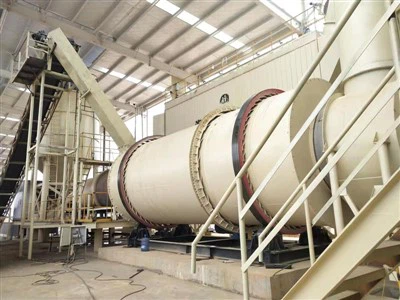
If you’re setting up training for your team, or you’re getting a new feeding and discharging system and need help with training, we’re here for it. We don’t just sell the gear—we make sure you know how to use it right. Hit us up to chat about how we can tailor training to your facility and your operators. Don’t let bad training mess up your runs—let’s get it right from the start.
Hot Air Furnaces References: 1. Occupational Safety and Health Administration (OSHA) guidelines for machinery operator training, 2. Plant Maintenance and Operations Journal, Vol. 18, No. 4, 2022, 3. Internal client performance data, 2021–2024
Jiangsu Haike Environmental Tech Co., Ltd.
As one of the most professional feeding and discharging system manufacturers and suppliers in China, we’re featured by quality products and good service. Please rest assured to wholesale customized feeding and discharging system at competitive price from our factory. Contact us for quotation.
Address: No.1, Wei’er Branch Road, Shanggang Industrial Park, Jianhu County, Yancheng City, Jiangsu Province, China
E-mail: 17388487000@163.com
WebSite: https://www.jshkhbwm.com/
