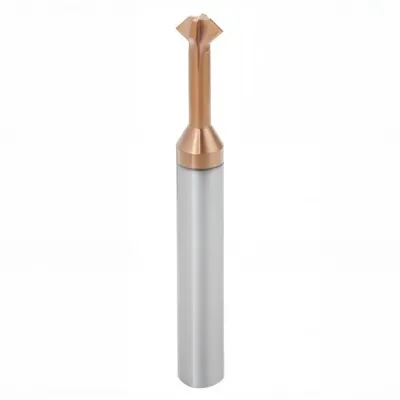
Drilling inserts are indispensable components in the machining industry, and understanding the cutting speed of drilling inserts is crucial for achieving efficient and high – quality machining operations. As a supplier of drilling inserts, I have extensive experience in this field and am eager to share some in – depth knowledge about the cutting speed of these vital tools. Drilling Inserts
Definition of Cutting Speed
Cutting speed, often denoted as (V_c), is a fundamental parameter in machining. It refers to the relative linear speed between the cutting edge of the drilling insert and the workpiece surface during the machining process. It is typically measured in meters per minute (m/min) or feet per minute (ft/min). Mathematically, it can be calculated using the formula (V_c=\pi DN/1000), where (D) is the diameter of the drill (in millimeters) and (N) is the rotational speed of the drill (in revolutions per minute, RPM).
For example, if we have a drill with a diameter (D = 10) mm and a rotational speed (N=1000) RPM, the cutting speed (V_c=\pi\times10\times1000/1000\approx 31.4) m/min.
Importance of Appropriate Cutting Speed
Determining the correct cutting speed is of utmost importance for several reasons.
Firstly, it directly impacts the tool life of the drilling insert. An excessively high cutting speed will generate excessive heat at the cutting edge. This heat can cause rapid wear, such as flank wear, crater wear, and even chipping of the insert. The high temperature can also lead to a change in the material properties of the cutting edge, making it more brittle and prone to failure. On the other hand, if the cutting speed is too low, the machining process will be inefficient, and the insert may experience built – up edge problems, which can deteriorate the surface finish of the workpiece.
Secondly, the cutting speed affects the surface quality of the machined part. A proper cutting speed helps to achieve a smooth surface finish. When the cutting speed is optimized, the chips are formed and removed more smoothly, reducing the chances of surface defects such as roughness, burrs, and tear – out.
Thirdly, it has a significant influence on the productivity of the machining process. By selecting the right cutting speed, we can balance the tool life and the machining time. A well – chosen cutting speed allows for a higher material removal rate without sacrificing the quality of the machined parts or prematurely wearing out the inserts.
Factors Affecting Cutting Speed
There are several factors that need to be considered when determining the cutting speed of drilling inserts.
Workpiece Material
The type of workpiece material is one of the most critical factors. Different materials have different hardness, strength, and thermal properties, which greatly affect the cutting speed. For example, when machining aluminum alloys, which are relatively soft materials, a higher cutting speed can be used compared to machining high – strength steels. Aluminum alloys can usually tolerate cutting speeds in the range of 300 – 500 m/min, while for high – strength steels, the cutting speed may be limited to around 50 – 200 m/min.
Insert Material
The material of the drilling insert also plays a key role. Common insert materials include carbide, high – speed steel (HSS), ceramic, and cubic boron nitride (CBN). Carbide inserts are widely used due to their high hardness, wear resistance, and heat resistance. They can generally operate at higher cutting speeds compared to HSS inserts. For instance, carbide inserts can achieve cutting speeds of 100 – 300 m/min when machining steel, while HSS inserts may be limited to 30 – 80 m/min in the same application.
Drill Geometry
The geometry of the drill, such as the point angle, helix angle, and flute design, can affect the cutting speed. A drill with an appropriate point angle can improve the centering ability and chip evacuation, allowing for a higher cutting speed. A larger helix angle promotes better chip removal, which is especially important when machining materials that produce long chips, and this can also support higher cutting speeds.
Coolant and Lubrication
The use of coolant and lubrication can significantly impact the cutting speed. Coolants help to remove heat from the cutting zone, reduce friction between the insert and the workpiece, and flush away the chips. By using an effective coolant, we can increase the cutting speed as it helps to maintain the integrity of the cutting edge and reduces the risk of thermal damage. For example, in some cases, the use of a proper coolant can allow for a 20 – 50% increase in cutting speed compared to dry cutting.
Determining the Optimal Cutting Speed
To determine the optimal cutting speed for a specific drilling operation, we typically start by referring to the manufacturer’s recommendations. Insert manufacturers usually provide cutting speed guidelines based on the insert material, the type of workpiece material, and the drill geometry.
In addition, practical experience also plays a vital role. Machinists can start with the recommended cutting speed and then make adjustments based on the actual machining situation. They can observe the tool wear, chip formation, surface finish of the workpiece, and the power consumption of the machine. If the inserts are wearing too quickly, the cutting speed may need to be reduced. If the machining process is too slow or the surface finish is poor, increasing the cutting speed might be a viable option.
Advanced simulation techniques can also be used to predict the optimal cutting speed. These simulations take into account various factors such as the material properties, drill geometry, and cutting conditions. By using computer – aided engineering (CAE) software, we can model the drilling process and obtain more accurate cutting speed recommendations.
Our Role as a Drilling Inserts Supplier
As a drilling inserts supplier, we are committed to providing our customers with not only high – quality products but also professional technical support. We understand that different customers have different machining requirements, and we work closely with them to select the most suitable drilling inserts and determine the optimal cutting speed for their specific applications.
We offer a wide range of drilling inserts made from different materials, such as carbide, HSS, and ceramic. Our inserts are manufactured with high – precision techniques to ensure excellent performance and long tool life. Whether our customers are machining soft materials like aluminum or hard materials like titanium alloys, we have the right inserts to meet their needs.
In addition to product supply, we also provide comprehensive technical training. Our experts can visit our customers’ facilities to conduct on – site training on insert selection, cutting speed determination, and machining process optimization. We believe that by sharing our knowledge and experience, we can help our customers improve their machining efficiency, reduce costs, and enhance the quality of their products.
Contact Us for Procurement
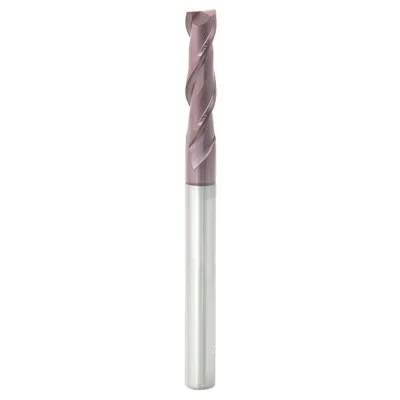
If you are in the market for high – quality drilling inserts and need professional advice on cutting speed and machining processes, we are here to help. Our team of experts is ready to answer your questions and work with you to find the best solutions for your machining needs. Whether you are a small – scale workshop or a large – scale manufacturing enterprise, we can provide you with customized products and services.
End Mills Don’t hesitate to reach out to us for procurement and technical discussions. We look forward to establishing a long – term and mutually beneficial partnership with you.
References
- "Machining Technology: Metal Cutting and Machine Tools" by M.P. Groover.
- "Manufacturing Engineering and Technology" by S. Kalpakjian and S.R. Schmid.
- Technical documentation from leading cutting tool manufacturers.
Small Craftsman (Shandong) Machine & Tools Co., Ltd.
Address: No.9 Quanxin Rd., Sishui Economic Developing Zone, Jining, Shandong, China.
E-mail: 6196@ocutchina.com
WebSite: https://www.ocutooling.com/
