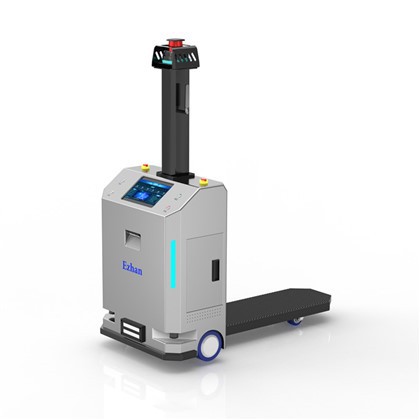
In today’s fast – paced industrial landscape, Automated Guided Vehicles (AGVs) have emerged as a pivotal solution for enhancing efficiency and productivity across various industries. As an AGV supplier deeply involved in this field, I am excited to share some insights into the navigation technologies used in AGVs. AGV
Types of Navigation Technologies in AGVs
1. Magnetic Navigation
Magnetic navigation is one of the earliest and most widely – used navigation methods for AGVs. It involves laying magnetic tapes or wires on the floor along the desired path of the AGV. The AGV is equipped with magnetic sensors that detect the magnetic field generated by these tapes or wires.
The principle behind magnetic navigation is relatively simple. The magnetic sensors on the AGV continuously sense the magnetic field, and based on the detected signals, the AGV’s control system calculates its position relative to the magnetic path. This information is then used to adjust the steering and speed of the AGV to keep it on the predefined route.
One of the main advantages of magnetic navigation is its high reliability. The magnetic tapes or wires are durable and can withstand heavy traffic and environmental factors such as dust and moisture. Moreover, it is a cost – effective solution, especially for small and medium – sized enterprises. Installation is also relatively straightforward, as the magnetic tapes can be easily laid on the floor surface.
However, magnetic navigation has some limitations. Once the magnetic path is installed, it is not easy to modify. Any changes in the AGV’s operating route require physical re – laying of the magnetic tapes or wires, which can be time – consuming and costly. Additionally, the AGV’s movement is restricted to the predefined magnetic path, limiting its flexibility in dynamic environments.
2. Laser Navigation
Laser navigation represents a significant leap forward in AGV technology. This method uses lasers to scan the surrounding environment and create a map of the area. The AGV is equipped with a laser scanner that emits laser beams in all directions and measures the distance to nearby objects by analyzing the reflected light.
To use laser navigation, a set of fixed reflectors (usually retro – reflective markers) are installed around the AGV’s operating area. The laser scanner on the AGV scans these reflectors and calculates its position based on the distance and angle information obtained from the reflected laser beams. The AGV’s control system then uses this position data to plan its path and navigate to the desired destination.
One of the key advantages of laser navigation is its high precision. It can achieve positioning accuracy within a few millimeters, making it suitable for applications that require precise movement, such as in semiconductor manufacturing and precision assembly lines. Laser – guided AGVs also offer greater flexibility compared to magnetic – guided AGVs. Since the path is determined by the map created by the laser scanner, it can be easily modified or updated in the control system without the need for physical changes to the environment.
However, laser navigation also has its drawbacks. The installation of reflectors can be time – consuming and requires careful planning to ensure accurate positioning. In addition, the cost of laser scanners and the associated control systems is relatively high, which may be a barrier for some budget – conscious customers. Moreover, the performance of laser navigation can be affected by environmental factors such as dust, smoke, and reflections from shiny surfaces.
3. Vision Navigation
Vision navigation is a relatively new and rapidly – evolving technology in the field of AGVs. It uses cameras to capture images of the surrounding environment and analyzes these images to determine the AGV’s position and orientation.
There are two main types of vision – based navigation systems: natural feature – based and marker – based. In natural feature – based vision navigation, the AGV’s camera captures images of the natural features in the environment, such as walls, columns, and landmarks. The control system then uses algorithms to identify and track these features, and calculate the AGV’s position based on their relative positions.
In marker – based vision navigation, artificial markers, such as QR codes or barcodes, are placed at specific locations in the AGV’s operating area. The camera on the AGV reads these markers and determines its position based on the marker’s known coordinates.
Vision navigation offers several advantages. It is highly flexible, as it can adapt to different environments without the need for specialized infrastructure like magnetic tapes or reflectors. Vision – guided AGVs can also make real – time decisions based on the visual information they receive, allowing them to navigate around obstacles and avoid collisions.
However, vision navigation also faces some challenges. Lighting conditions can significantly affect the performance of the camera, and complex environments with cluttered images may make it difficult for the control system to accurately identify and track features. Additionally, the processing power required for image analysis can be significant, which may increase the cost and complexity of the AGV’s control system.
4. Inertial Navigation
Inertial navigation uses inertial measurement units (IMUs), which typically consist of accelerometers and gyroscopes, to measure the AGV’s acceleration and angular velocity. By integrating these measurements over time, the AGV’s control system can calculate its position, velocity, and orientation.
One of the main advantages of inertial navigation is its independence from external sensors or references. It can operate in environments where other navigation methods may not be suitable, such as in areas with poor lighting or where magnetic interference is present. Inertial – guided AGVs can also provide continuous and real – time position information, which is useful for high – speed applications.
However, inertial navigation has a major drawback: the accumulation of errors over time. Small errors in the measurement of acceleration and angular velocity can lead to significant position errors as the AGV moves. To mitigate this problem, inertial navigation is often combined with other navigation methods, such as laser or vision navigation, in a hybrid navigation system.
Hybrid Navigation Systems
In many practical applications, a single navigation technology may not be sufficient to meet the requirements of the AGV’s operation. This is where hybrid navigation systems come into play. A hybrid navigation system combines two or more navigation technologies to take advantage of their respective strengths and compensate for their weaknesses.
For example, a combination of laser navigation and inertial navigation can provide high – precision positioning over long distances while also being able to operate in areas where the laser scanner may not work properly, such as around large obstacles. The laser navigation system provides accurate position information when the reflectors are visible, while the inertial navigation system fills in the gaps during periods when the laser scanner is blocked.
Another common hybrid system is the combination of vision navigation and magnetic navigation. The magnetic navigation provides a stable and reliable base path, while the vision navigation allows the AGV to make adjustments in real – time based on the visual information, such as avoiding unexpected obstacles or deviating from the path to perform a specific task.
Impact of Navigation Technology on AGV Applications
The choice of navigation technology has a significant impact on the applications of AGVs. In warehousing and logistics, for example, magnetic – guided AGVs are often used for simple and repetitive tasks, such as transporting goods between fixed storage locations. Their low cost and reliability make them a popular choice for large – scale distribution centers.
On the other hand, laser – guided AGVs are more suitable for applications that require high precision and flexibility, such as in automated manufacturing plants. They can be easily integrated into complex production lines and can adapt to changes in the production process quickly.
Vision – guided AGVs are finding increasing use in e – commerce fulfillment centers, where they need to navigate in dynamic and unstructured environments. Their ability to detect and avoid obstacles in real – time makes them ideal for handling a wide variety of products and order configurations.
Conclusion
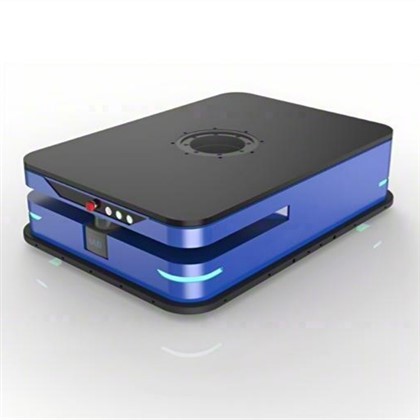
Navigation technology is at the heart of AGV operation, and the advancements in this field have opened up new possibilities for industrial automation. As an AGV supplier, we are constantly working on improving and innovating our navigation solutions to meet the diverse needs of our customers.
Customized AMR/AGV Robot Whether you are looking for a reliable and cost – effective magnetic – guided AGV, a high – precision laser – guided AGV, a flexible vision – guided AGV, or a hybrid navigation system, we have the expertise and products to meet your requirements. If you are interested in incorporating AGVs into your operations and would like to discuss your specific needs, we invite you to reach out to us for a purchasing consultation. We are committed to providing you with the best – in – class AGV solutions to enhance your productivity and efficiency.
References
- Seo, S. H., Ryu, S. K., & Lee, J. H. (2017). Comparison of AGV navigation methods for flexible manufacturing systems. Journal of Intelligent & Robotic Systems, 89(1 – 2), 131 – 143.
- Wang, J., & Meng, M. Q. – H. (2018). Vision – based navigation for automated guided vehicles: A review. IEEE Transactions on Intelligent Transportation Systems, 19(2), 387 – 402.
- Thrun, S., Burgard, W., & Fox, D. (2005). Probabilistic robotics. MIT press.
Shenzhen Ezhan Technology Co., Ltd.
We’re known as one of the most reliable AGV manufacturers and suppliers in China. With abundant experience, we warmly welcome you to buy bulk customized AGV from our factory. If you have any enquiry about cooperation, please feel free to email us.
Address: Room 1808, 1809, 1810, Building 2, Aipark, Baolong 4th Road, Longgang District, Shenzhen City
E-mail: sales01@ezhankeji.com
WebSite: https://www.ezhanrobot.com/
