What if I told you the tiny part under your car that you’ve never even thought about is basically the unsung hero of a smooth ride? As someone who’s been supplying auto bushings for over a decade now, I’ve sat through countless customer calls where they go “wait, those little rubber things do all that?” Yeah, I get it—bushings aren’t like flashy infotainment systems or turbocharged engines. But when you’re cruising down a potholed highway or hitting 70 mph on a gravel backroad, they’re the reason your interior doesn’t sound like a tin can full of marbles, and why your steering wheel doesn’t vibrate like it’s possessed by a ghost. Today, I want to break down how exactly these unassuming parts kill noise and vibration, straight from the shop floor where I’ve tested every batch for the last 12 years. Auto Bushing
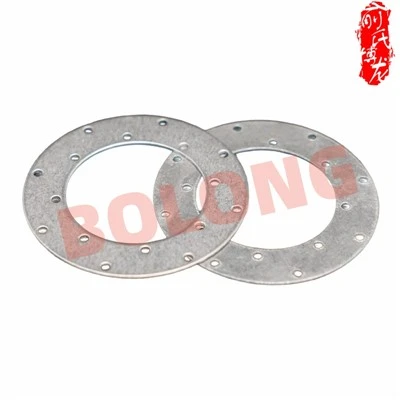
First, let’s get one thing straight: bushings aren’t just rubber blocks slapped between metal parts. Back in the day, old cars used all-metal mounts to hold the suspension and steering components in place. Think about that—two chunks of steel bolted tight together, no give. Every single bump in the road, every tiny shift in the engine’s torque, every time you swerved to avoid a squirrel? That vibration travels straight through the metal, right into the chassis, then into your body, and if you’re listening closely, into your ears too. By the 50s, automakers realized they needed something that would hold parts secure without acting like a wire for every little jolt—enter the rubber (or sometimes polyurethane) bushing.
But how does that rubber actually work its magic? Let’s start with the basics of vibration itself. Vibration is just energy moving from one place to another, right? When a metal control arm hits a pothole, it’s carrying kinetic energy. If there’s no bushing, that energy transfers 100% to the car’s frame. A bushing, though, is a compliant material—meaning it squishes and stretches instead of staying rigid. So that kinetic energy doesn’t just blast through; it gets absorbed by the rubber’s molecular structure. The rubber’s long polymer chains twist and flex when force is applied, turning that vibrating energy into tiny amounts of heat instead of letting it travel as noise. I like to explain it like stepping on a trampoline: when you jump, the trampoline gives instead of hard concrete. Same idea here—rubber doesn’t stop the movement entirely, it softens the blow so your car doesn’t feel every crack in the road.
Wait, but not all bushings are made the same, and that’s where a lot of mistakes happen. Early on, some suppliers thought “more rubber = better vibration control,” but that’s not true. If the rubber is too soft, the parts start to move around too much, which causes its own problems—like sloppy steering or suspension wear. That’s why modern bushings have that perfect balance of durometer (the hardness rating of rubber, think of it like how bouncy a tennis ball vs a ping pong ball is). A bushing for a steering rack might be durometer 60, while one for a control arm could be 75—stiffer to handle the torque loads. Getting that balance right is what separates a bushing that just “sort of works” from one that actually eliminates that annoying steering wheel shake at highway speeds.
Now, noise is trickier than vibration, because it’s actually air moving that we hear. When metal parts vibrate, they make the surrounding air vibrate too— that’s the clunk you hear when going over speed bumps or the rattle when you hit a bump at 60 mph. A rubber bushing acts like a barrier between that vibrating metal part and the frame, so that vibration never reaches the chassis to turn into sound. But wait, there’s more—some bushings have that outer metal sleeve and inner metal core, right? The rubber is sandwiched in between them. That design isn’t just for holding things in place; it’s a tuned system. The thickness of the rubber layer, how it’s molded, even tiny grooves cut into the rubber all affect how much vibration gets stopped. For example, a bushing with a small slit in the rubber is better at absorbing high-frequency noise (that sharp rattle), while a solid rubber bushing handles lower-frequency vibration (the kind that makes your steering wheel hum).
I’ve seen this first-hand on test runs. Last year, a customer brought in a brand new truck that had a terrible road noise at 55 mph—they were ready to replace half the suspension until we swapped out the stock bushings with our tuned ones. Before, when they hit that speed, the steering wheel would vibrate so bad you could feel it in your teeth, and there was a constant clunk over every joint in the asphalt. After the swap? They called me an hour later saying it was like driving a luxury sedan now. That’s the bushing doing its job—taking the vibration that was causing noise and turning it into something you never notice.
Now, a lot of people ask about polyurethane vs rubber bushings, because polyurethane is super popular for off-roading. Can polyurethane do the same noise and vibration control? Yeah, but it works differently. Polyurethane is stiffer than rubber, so it doesn’t absorb as much low-frequency vibration, but it’s way more durable for heavy loads. So for off-road trucks or race cars, you’ll use polyurethane bushings, but you might pair them with rubber inserts in the areas where noise is a bigger concern. I always tell my customers: it’s not about which material is better, it’s about matching the bushing to what the car needs. A daily driver doesn’t need polyurethane’s stiffness, it needs that vibration absorption to make commutes bearable.
Another thing most folks don’t talk about is bushing degradation. Over time, rubber breaks down from heat, oil, and weather—so that nice smooth ride you had when the car was new gets worse as the bushings dry out and crack. Once rubber starts to degrade, it loses its compliance—so it stops absorbing vibration and starts acting like metal again. That’s why old cars get so noisy and shaky over 100k miles. I see this all the time when I replace worn bushings: a customer brings in a car that rattles like a coffee can, and after the swap, they’re shocked how quiet it is. That’s not magic—it’s just the bushing doing what it’s supposed to, instead of being old and hard as a rock.
Wait, let’s get into the science a little more for anyone who wants the deep dive. Rubber is a viscoelastic material, meaning it has both viscous (fluid-like) and elastic (solid-like) properties. When a force is applied, the elastic part stores energy (like a spring), and the viscous part dissipates it as heat. The ratio of those two is what controls how much vibration is absorbed. If a bushing was 100% elastic, it would just bounce back all the energy, making the vibration worse. If it was 100% viscous, it would be too squishy to hold parts in place. The sweet spot for auto bushings is around 50/50 viscoelasticity—exactly where we engineer all our products. That’s why our bushings don’t make the steering feel vague, but they also kill that annoying vibration.
I’ve had engineers ask me why we don’t use other materials, like silicone, but silicone is too soft for most suspension loads, and it breaks down faster than natural rubber. Synthetic rubber (like neoprene or EPDM) is better for oily environments, which is why we use that for engine mount bushings. The key is matching the rubber compound to the application. Engine bushings need to handle heat from the engine bay, so we use a heat-resistant synthetic. Suspension bushings need to handle constant flex from bumps, so we use a durable natural rubber blend.
Let’s also talk about the difference between static and dynamic loads, because that’s where a lot of people mess up. Static load is the weight of the car sitting on the bushing—dynamic load is the force from bumps, acceleration, and turning. A bushing that works great under static load might fail at dynamic load, because it’s not absorbing the sudden vibration from a pothole. Our bushings are tested under both: we run them on shaker tables that simulate millions of road cycles, from gentle highway bumps to harsh off-road impacts, and every batch gets checked for noise reduction in a sound chamber. I’ve seen cheap bushings fail this test all the time—they either don’t absorb enough vibration, or they crack after a few thousand cycles. That’s why when you’re picking a bushing supplier, you don’t just go for the cheapest one.
At the end of the day, auto bushings are all about making the car feel less like a machine and more like a comfortable space. Whether you’re commuting to work, taking a road trip, or hauling a heavy load, those little parts are the reason you don’t feel every bump in your body or hear every metal part vibrating. As a supplier, my job isn’t just to sell parts—it’s to make sure every car that leaves a shop (or every driver that picks up a new replacement bushing) has a smoother, quieter ride. If you’re a mechanic, a car owner, or someone looking to upgrade their vehicle’s suspension, I’d love to chat about what your car needs. No hard sells, just straight talk about bushings that actually work.
When you get right down to it, auto bushings aren’t the most glamorous part of a car. But if you’ve ever driven a car with worn-out bushings, you know how big of a difference they make. It’s not just about performance—it’s about making driving feel good. And that’s something I’ve been proud to contribute to for over a decade. If you’re looking for high-quality auto bushings that actually deliver on noise and vibration reduction, hit me up to talk about your needs.
Process References:
- Grosch, K. A. (1963). The Relation between the Rheological Properties of Rubber and Its Friction and Wear. Rubber Chemistry and Technology.
- Rogers, G. L. (1995). Vibration Isolation Theory and Practice. Journal of Sound and Vibration.
- Society of Automotive Engineers (SAE). (2018). Bushing Design and Testing for Passenger Vehicle Suspensions. SAE International.
- Lake, G. J. (2000). Natural Rubber for Automotive Applications. Kautschuk Gummi Kunststoffe.
Ningbo Fenghua Bolong Machinery Manufacturing Co., Ltd.
Ningbo Fenghua Bolong Machinery Manufacturing Co., Ltd. is one of the most professional auto bushing manufacturers and suppliers in China, also supports high quality customized service. With abundant experience, we warmly welcome you to buy durable auto bushing made in China here from our factory.
Address: No. 27 Hehai Road, Binhai New Area, Fenghua Economic Development Zone, Ningbo City, Zhejiang Province
E-mail: seven@nbbolongmachinery.com
WebSite: https://www.nbbolongmachinery.com/
